
SWIFT CSP Compliance

Global Financial Messaging Security & Operational Resilience
Framework Breakdown

What is SWIFT CSP?

The SWIFT Customer Security Programme (CSP) establishes a common set of security controls designed to help financial institutions strengthen their defenses against cyberattacks. It mandates a Customer Security Controls Framework (CSCF) that focuses on three primary objectives: securing the local environment, knowing and limiting access, and detecting and responding to threats.

For organizations operating within the financial ecosystem, maintaining compliance is a critical measure for building operational resilience and ensuring the integrity of the global financial network.

Core Requirements & Our Services

Governance & Risk Assessment
Establish mandatory risk management frameworks and internal security policies. Define governance structures to oversee SWIFT-related security activities.
Infrastructure & Network Hardening
Implement secure configurations and system hardening for the SWIFT infrastructure. Continuous monitoring of endpoints and wireless access points to prevent unauthorized entry.
Identity & Access Management
Enforce strict access controls and multi-factor authentication for the local SWIFT environment. Periodic review of user privileges to ensure "least privilege" principles are met.
Vulnerability Management & Testing
Fulfill annual penetration testing requirements to validate security measures. Conduct continuous vulnerability scanning and systematic patch management.
Threat Detection & Incident Response
Deploy early warning mechanisms and 24/7 threat monitoring capabilities. Formalize incident handling procedures to meet mandatory reporting obligations.
Human Factor & Training
Implement cybersecurity awareness training for all staff with access to financial systems. Integrate HR security clauses and vetting processes for high-sensitivity roles.

How We Help You Comply

Comprehensive assessment of current controls against the latest CSCF version.
Audit-ready reports required for the annual SWIFT self-attestation.
Continuous monitoring and threat intelligence to detect unauthorized activity.
Rapid incident response and forensic readiness for financial entities.

Example Swift CSP Report

Our export-ready reporting structure is designed to be presented directly to your board or regulatory bodies. It provides a high-level view of your security posture, including:

  • Summary of Attestation Status: Clear indicators of compliant vs. non-compliant controls.

  • Risk Overview: Identification of critical gaps within the SWIFT environment.

  • Vulnerability Posture: Real-time data on system weaknesses and remediation progress.

  • Action Roadmap: Prioritized next steps to maintain continuous compliance.
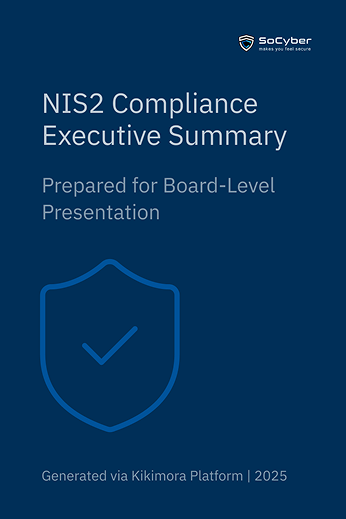
You’ll receive a PDF file directly to your inbox. No Spam.

Example Swift CSP Report

The SWIFT CSP is a security framework designed to help financial institutions ensure their local environments are secure. It mandates a set of baseline security controls to detect and prevent fraudulent activity.
Yes, compliance is mandatory for all SWIFT users. Every entity must submit a self-attestation annually against the mandatory security controls defined in the CSCF.
Organizations are required to complete a self-attestation every year. This ensures that security measures remain effective against evolving cyber threats.
Mandatory Controls: These establish a security baseline and must be implemented by all users. Advisory Controls: These are recommended best practices that may become mandatory in future versions of the framework.
Yes, SWIFT requires that self-attestations be independently assessed. This can be done by an internal department independent of the SWIFT operations (such as Internal Audit) or by an external third-party firm.
The framework is built on three main pillars - Secure your Environment: Limiting the footprint of the SWIFT infrastructure. Know and Limit Access: Ensuring only authorized personnel can access the system. Detect and Respond: Continuous monitoring and incident handling.
Users must implement continuous security monitoring and systematic patch management procedures. Regular penetration testing is also a requirement to validate that network security measures are functioning correctly.
SWIFT reserves the right to report non-compliant entities to their local financial supervisors and regulators. This can lead to significant regulatory scrutiny and potential loss of trust within the financial ecosystem.
Absolutely. Many requirements overlap, such as governance, risk management, incident reporting, and workforce awareness training. A unified approach to these frameworks can streamline the audit process.
An executive report should include a summary of the current compliance status, an overview of identified risks, the organization’s incident handling capabilities, and a roadmap for addressing any remaining gaps.